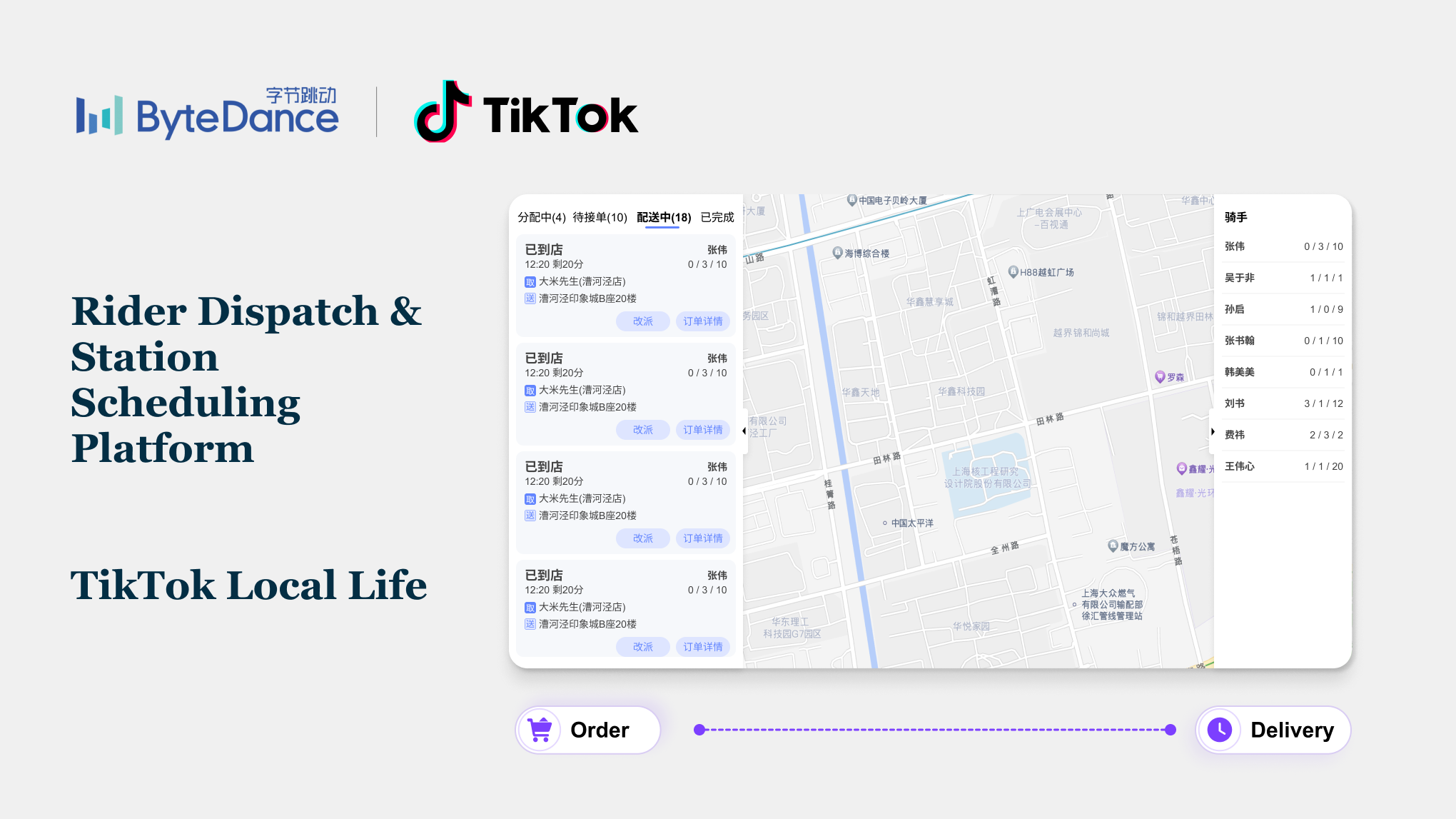
While TikTok’s front-end experience focused on users’ desire-driven orders, the backend needed an equally powerful delivery infrastructure. I led the design of a dispatch and scheduling platform for local delivery stations — helping managers assign riders efficiently, track orders in real-time, and visualize delivery routes. This platform empowered on-ground logistics, mirroring B2B systems like Zendesk or Salesforce Workspaces but tailored for TikTok's ecosystem.
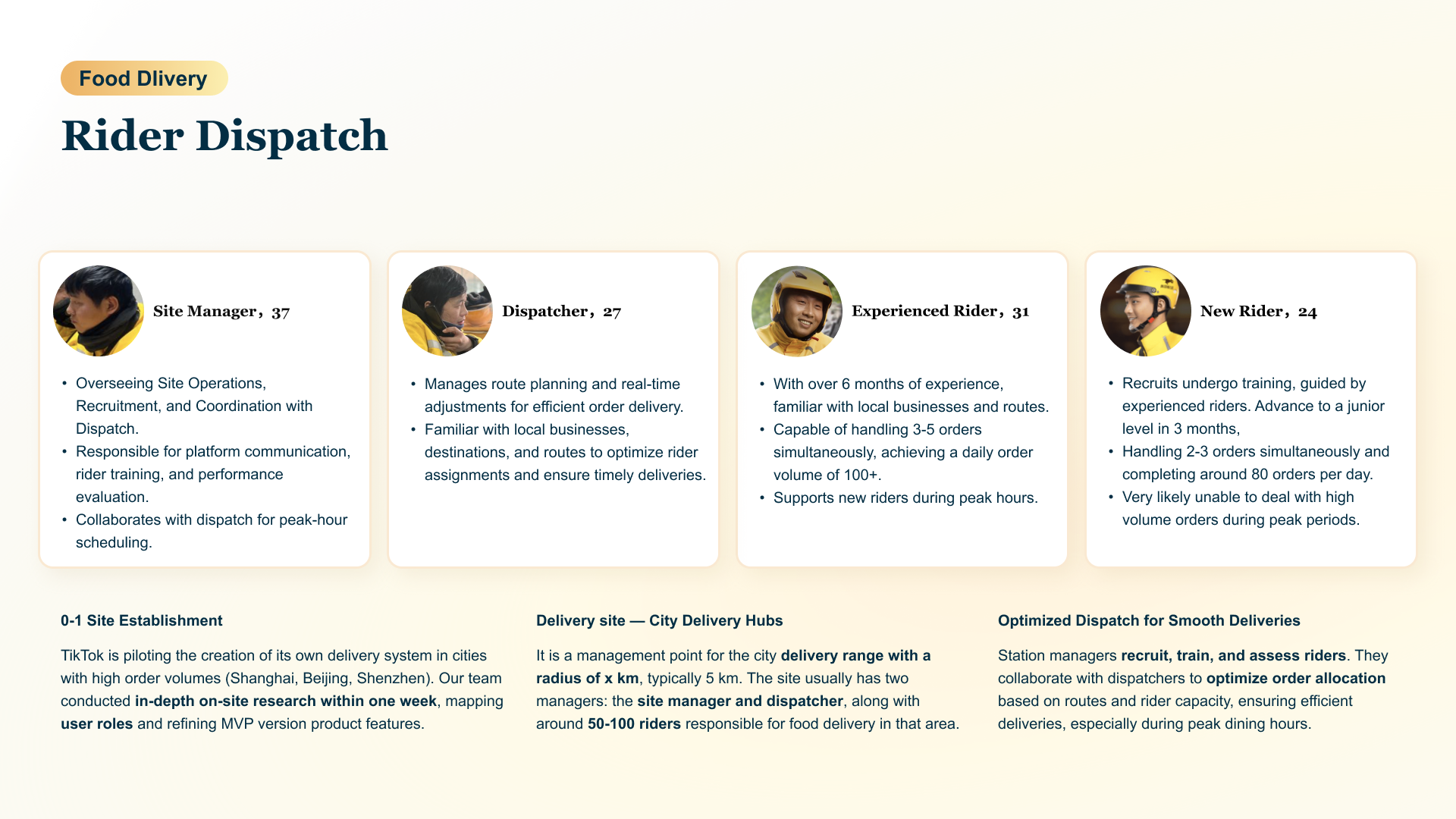
TikTok's delivery network was expanding rapidly, yet local dispatch relied on manual coordination through chat groups or spreadsheets. This led to:
The key problem:
"How might we help delivery station managers schedule riders dynamically, balancing speed, cost, and fairness?"
Interviewed station managers and riders to identify inefficiencies. Mapped the information flow from "order generation" → "rider assignment" → "delivery tracking."
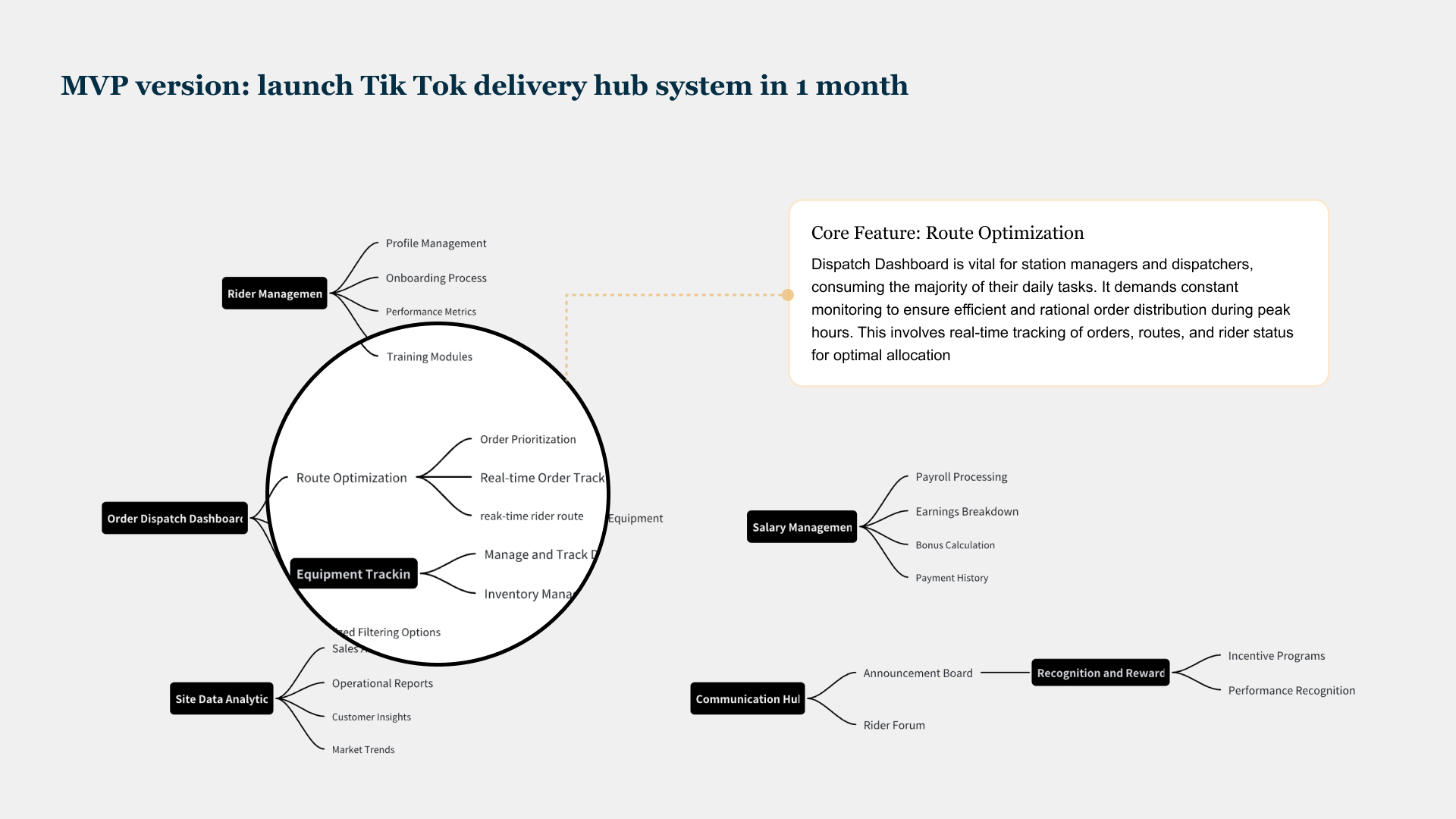
Adopted a "command-center" UI layout with priority color tags and drag-to-assign actions. Enabled real-time updates with minimal cognitive load for dispatchers.
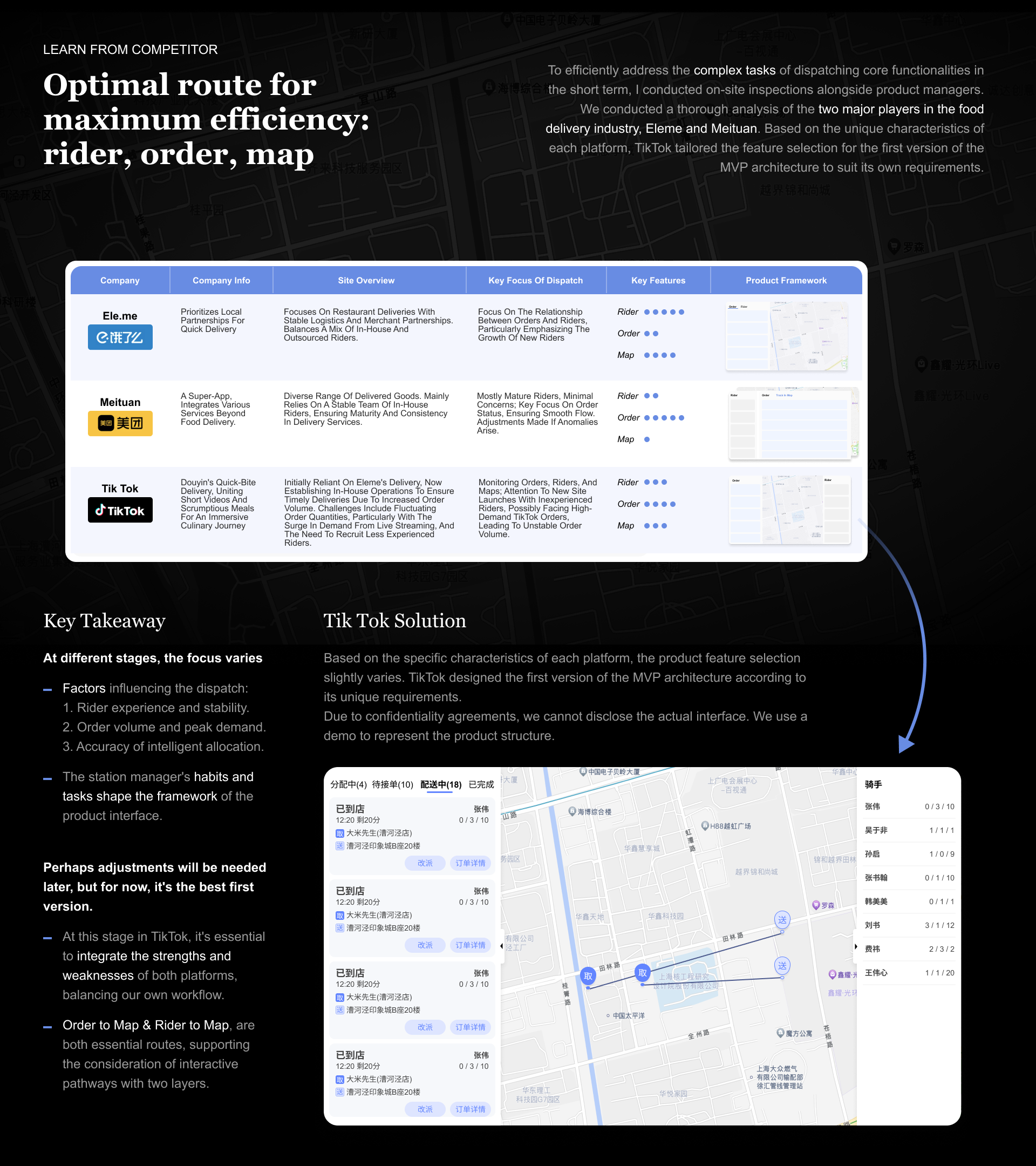
This project shifted my mindset from consumer UX to operational systems thinking — designing for speed, clarity, and decision support, not just aesthetic or emotion.